AI Receptionists for South African Businesses: What They Do, Which Languages They Handle and What They Cost
What an AI receptionist does, where it works and fails, which South African languages vendors support, and what it costs using published SA call rates.
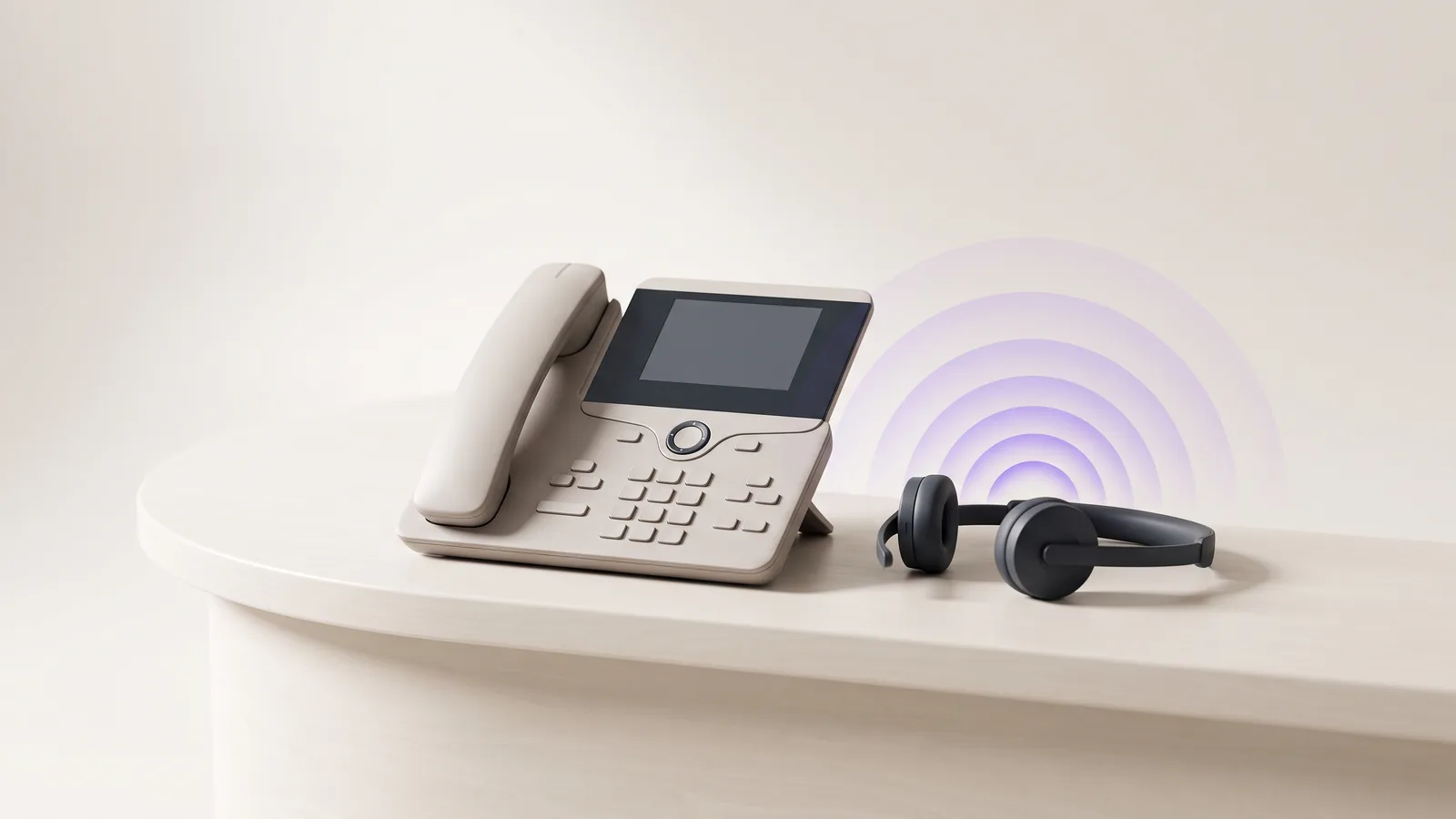
An AI receptionist is software that answers your business phone with a natural-sounding voice, understands what callers say, and handles routine calls such as bookings, opening hours and message-taking, passing everything else to a person. For South African businesses it works best on high-volume, repetitive calls in English and Afrikaans, and needs careful testing for other local languages.
The same technology goes by several names: AI voice agent, AI phone agent, AI call centre. Underneath, they all chain three pieces together. Speech-to-text turns the caller's words into text, a large language model decides what to say and do, and text-to-speech speaks the reply. Each piece has strengths and limits, and in South Africa the limits show up first in language coverage.
In short
- An AI receptionist answers every call at once, at any hour, and can book appointments, answer FAQs, take messages and route calls.
- It works best for predictable calls. It struggles with emotional, urgent or unusual calls, so a transfer to a person must always be available.
- South African language support depends on the vendor. Microsoft lists English (South Africa), Afrikaans and isiZulu. Google lists more languages for transcription but only one Afrikaans voice.
- Cost has three parts: the phone line, a per-minute AI platform fee and setup. Twilio publishes South African call rates in US dollars.
- Outbound AI sales calls fall under POPIA section 69. Inbound answering is far simpler.
What does an AI receptionist actually do?
A well-built AI receptionist handles the calls your front desk takes all day:
- Answers questions about hours, location, prices, services and policies from a knowledge base you control.
- Books, moves and cancels appointments by reading and writing to your calendar or booking system.
- Takes messages and routes calls to the right person or department, with a written summary.
- Captures leads after hours, then follows up by WhatsApp or hands the lead to sales in the morning.
- Transfers to a human when the caller asks, or when the call goes beyond what it was set up to do.
It is one kind of AI agent: software that takes actions, not only answers. Our explainer on what AI agents are covers the wider family.
AI receptionist, virtual receptionist or IVR: what's the difference?
| IVR ("press 1") | Virtual receptionist | AI receptionist | |
|---|---|---|---|
| Who answers | A recorded menu | A person at an answering service | Software with a synthetic voice |
| How callers ask | Keypad or fixed phrases | Normal conversation | Normal conversation |
| Can take actions | Only fixed routing | Yes, by hand | Yes, through integrations |
| Calls at once | Many | One per person | Many |
| Best at | Simple routing | Nuance and empathy | Volume and after-hours |
Conversio has written a deeper comparison of AI voice agents and IVR in South Africa.
Where do AI receptionists work, and where don't they?
They work well for:
- After-hours calls that would otherwise reach voicemail.
- Overflow when every line is busy, such as Monday mornings at a busy practice.
- Bookings where the rules are clear: appointment types, durations, who sees whom.
- Repeat questions that eat receptionist time: directions, parking, documents to bring.
They do not work well for:
- Urgent or safety-related calls. Anything involving harm, a medical emergency or a security incident should go straight to a person.
- Upset callers and complaints. People who are angry want to be heard by a human.
- Complex or judgement calls, such as negotiating, quoting non-standard work or giving regulated advice.
- Languages and accents the system was not built for. Recognition errors compound: a misheard name or date becomes a wrong booking.
- Callers who refuse to talk to a machine. Offer a human early, not after three failed attempts.
Which South African languages can an AI receptionist handle?
Every vendor says "multilingual". The published language lists tell a narrower story. This is what each provider's own documentation listed when we checked on 11 October 2026:
| Provider | Speech-to-text (hearing) | Text-to-speech (speaking) |
|---|---|---|
| Microsoft Azure AI Speech | English (South Africa), Afrikaans, isiZulu | English (South Africa), Afrikaans and isiZulu voices, two of each |
| Google Cloud | Afrikaans, isiZulu, isiXhosa and Sepedi on its Chirp models. Sesotho, Setswana, Xitsonga, Tshivenda and siSwati on its general long and short models. No isiNdebele | One standard Afrikaans voice. No isiZulu or isiXhosa voice |
| Deepgram (Nova-3) | Afrikaans. No South African English code, and no isiZulu, isiXhosa, Sesotho or Setswana | Not covered here |
| ElevenLabs | English, Afrikaans, isiZulu, isiXhosa and Sepedi, with published error rates (below) | Eleven v4 lists Afrikaans and Zulu among 90+ languages |
Sources: Microsoft Learn, Google Cloud Speech-to-Text, Google Cloud Text-to-Speech, Deepgram, ElevenLabs models.
Being on a list is not the same as working well. ElevenLabs is unusually open about this. Its speech-to-text page groups languages by word error rate (the share of words transcribed wrongly): English is "Excellent" at 5% or less, Afrikaans "Good" at more than 10% up to 20%, and isiZulu, isiXhosa and Sepedi "Moderate" at more than 25% up to 50%. At the top of that range, the system mishears one word in two.
Two practical points follow. First, callers who switch languages mid-sentence are a harder test still, and none of these lists makes any promise about that. Second, test with recordings of your own callers, on a real phone line, before you go live. A demo in a quiet room proves very little.
How much does an AI receptionist cost in South Africa?
An AI receptionist bill has three parts. The figures below are published US dollar prices converted at R16.53 to the dollar, derived from European Central Bank reference rates for 9 October 2026.
1. The phone line. Twilio's South African voice pricing, current as of August 2026, lists:
| Item | Published price | Approximate rand |
|---|---|---|
| Local SA number | $1.50 per month | R25 per month |
| Receiving calls on a local number | $0.0107 per minute | R0.18 per minute |
| Calling an SA landline from a Twilio SA number | $0.0362 per minute | R0.60 per minute |
| Calling an SA mobile from a Twilio SA number | $0.0499 per minute | R0.83 per minute |
2. The AI platform. Platforms charge per minute of conversation. Retell AI, for example, publishes $0.07 to $0.31 per minute depending on the language model and voice chosen, and its own worked example comes to $0.11 per minute (about R1.82) before telephony.
3. Setup and integration. Connecting the calendar, CRM and knowledge base, and writing the handover rules, is project work priced by whoever builds it.
For example, a Pretoria dental practice whose AI receptionist handles 1,000 minutes of incoming calls a month would pay roughly $110 in platform fees at $0.11 a minute, $10.70 for incoming call minutes and $1.50 for the number: about $122, or R2,020 a month, before tax, setup and integration. Compare that with what missed calls cost you, not only with a salary.
What does POPIA mean for AI voice agents that make calls?
Answering calls that people choose to make to you is the simple case. Recordings and transcripts still contain personal information, so tell callers they are speaking to an AI and keep only what you need.
Outbound calling is different. The Information Regulator's guidance note on direct marketing says it considers telephone calls to be electronic communication, which brings sales calls under section 69: consent first, unless the person is an existing customer being offered similar products. Section 69(5) defines an automatic calling machine as "a machine that is able to do automated calls without human intervention." The guidance says that where an automatic calling machine is used to ask for consent, the recorded message must contain everything in the Regulator's Form 4 and the person's response must be recorded.
In April 2026 the Regulator welcomed new Consumer Protection Act regulations against spam calls and stressed that POPIA compliance remains mandatory whether or not a consumer has registered a pre-emptive block. If you plan outbound AI calls, get your own legal advice first. Our guide to lead generation in South Africa covers section 69 in more detail.
How to roll out an AI receptionist without annoying your callers
- Read a month of calls. List why people call and when. The top five reasons are your first scope.
- Start with after-hours and overflow. Your team keeps the daytime calls while you learn what the AI gets wrong.
- Write the knowledge base and the handover rules. Decide exactly when it transfers, and to whom.
- Test on real phone lines with your callers' languages and accents.
- Always offer a human. Say early in the call that the caller can ask for a person.
- Review transcripts weekly. Fix wrong answers at the source, then widen the scope.
AmbitX's Callr voice agent is one example of an AI voice agent that answers and phones leads. Our guide to AI automation for South African businesses shows where voice fits alongside other automations.
Frequently asked questions
- What is an AI receptionist?
- An AI receptionist is software that answers a business's phone calls with a synthetic voice, understands what the caller says, and handles routine requests such as bookings, opening hours, directions and message-taking. Anything it cannot handle should be transferred to a person.
- Can an AI receptionist speak isiZulu or Afrikaans?
- Some can, but coverage varies by vendor. Microsoft's Azure speech service lists speech recognition and voices for English (South Africa), Afrikaans and isiZulu. ElevenLabs publishes word error rates of 25 to 50 percent for isiZulu and isiXhosa transcription, so test with real callers before relying on any African language.
- How much does an AI receptionist cost in South Africa?
- Costs have three parts: the phone line, the AI platform per minute and setup. Twilio's published South African rates are 1.50 US dollars a month for a local number and about 1 US cent a minute to receive calls, and Retell AI publishes platform prices of 7 to 31 US cents a minute, before setup and integration.
- What is the difference between an AI receptionist and a virtual receptionist?
- A virtual receptionist is usually a person working remotely for an answering service. An AI receptionist is software. The AI answers every call at once at any hour, while a human handles nuance, emotion and unusual requests better.
- Can an AI voice agent make sales calls in South Africa?
- Only with great care. The Information Regulator treats telephone calls as electronic communication under POPIA section 69, which requires consent for direct marketing to anyone who is not an existing customer, and the Act covers automated calls made without human intervention. Get legal advice before running outbound AI calls.
Sources
- Microsoft Learn: Language and voice support for the Speech service
- Google Cloud: Speech-to-Text supported languages
- Google Cloud: Text-to-Speech supported voices and languages
- Deepgram: Models and languages overview
- ElevenLabs: Models
- ElevenLabs: Speech to Text
- Twilio: Voice pricing for South Africa (current as of August 2026)
- Retell AI: Pricing
- Frankfurter (European Central Bank reference rates): USD to ZAR, 9 October 2026
- Information Regulator: Guidance Note on Direct Marketing in terms of POPIA (3 December 2024)
- Information Regulator: Media statement on the Consumer Protection Act Amendment Regulations 2026 (21 April 2026)
Want an AI agent doing this work for your business?
AmbitX designs, builds and runs AI agents for South African businesses. Tell us the job and we will tell you honestly whether an agent can do it.