AI Automation for South African Businesses: What It Is and What to Automate First
AI automation for South African businesses: how it differs from workflow automation, what to automate first, what it costs in rand and the POPIA basics.
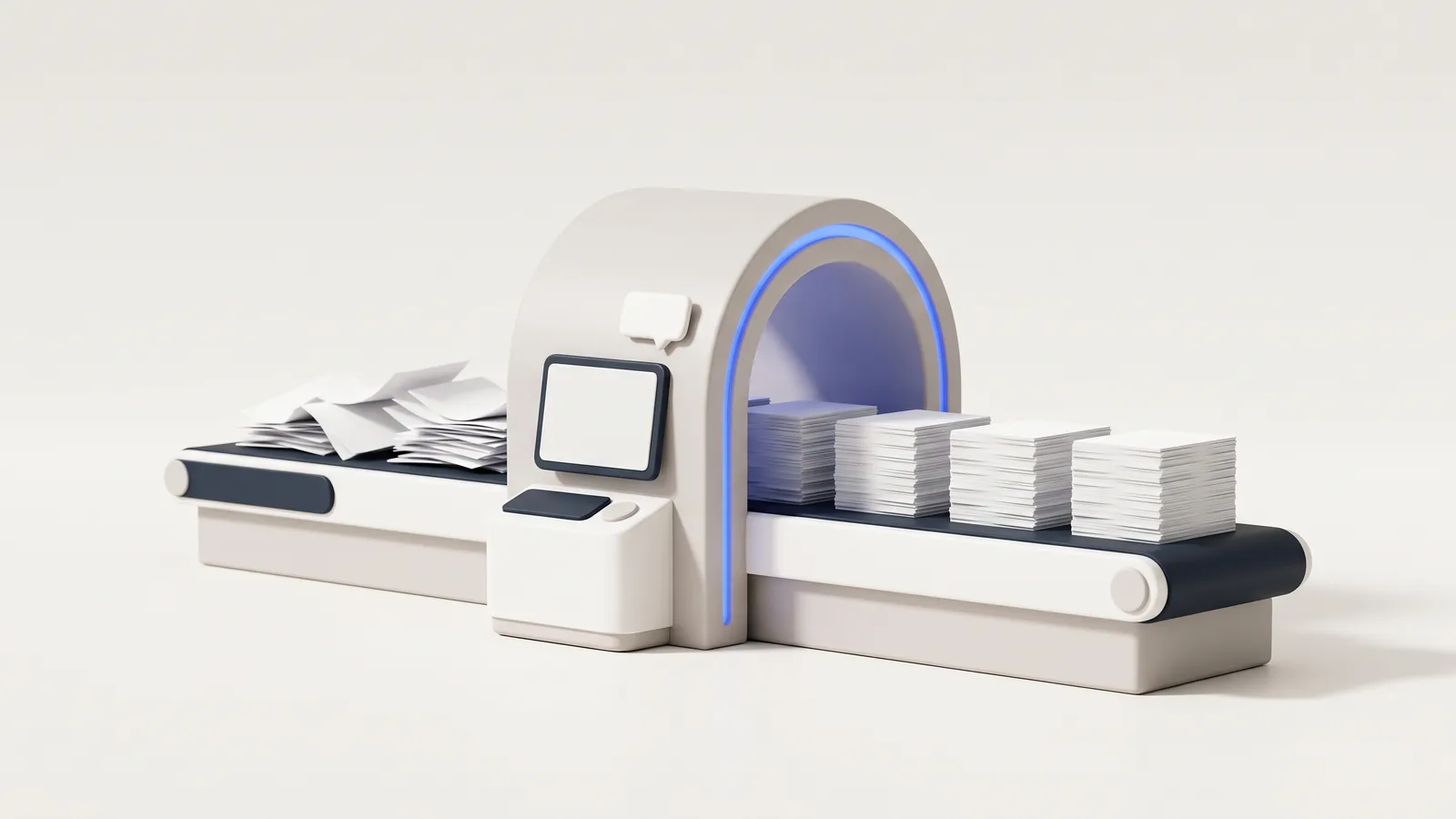
AI automation is the use of AI models, usually large language models, inside a business workflow so that software can handle steps that need judgement, such as reading a customer message, working out what it is about and drafting a reply. For most South African businesses, the best first project is a high-volume, text-heavy task where speed matters, like answering and qualifying new leads.
Many South African businesses are already experimenting. Xero's 2026 survey of 427 South African small businesses, run in January and February 2026, found that 52% use AI tools daily or weekly, with automating processes (44%) among the uses. The same survey found that 56% want more help understanding how AI fits their own operations. This guide is about that second number: where AI automation fits, and where it does not.
In short
- AI automation combines rules-based workflow automation with an AI model that handles the steps needing reading, sorting or writing.
- Start where volume is high, the task repeats, the input is already digital and a person can check the output.
- Common first projects: lead response, inbox triage, document capture and report summaries.
- At October 2026 prices, entry-level tools cost a few hundred rand a month, and a short AI-written reply can cost a few cents in model usage.
- POPIA applies as soon as customer data flows through an AI tool, so plan for it before you build.
What is AI automation?
Traditional automation follows a fixed set of rules. AI automation, as Salesforce puts it, uses machine learning, natural language processing and related technologies so systems can interpret data and make choices. In practice, there are four layers, and most real projects use more than one.
| Type | What it does | Works well when | Breaks when |
|---|---|---|---|
| Workflow automation | Moves data between apps on fixed rules (Zapier, Make, n8n) | Inputs are structured, like form fields | The input is free text or varies |
| Robotic process automation (RPA) | Software bots click through screens like a person | Old systems have no API | Screens change |
| AI automation | An AI model reads, classifies, extracts or drafts inside a workflow | Inputs are messy: messages, PDFs, emails | Nobody checks the output |
| AI agents | The AI decides its next step and uses tools across several steps | The goal is clear but the path varies | Scope and guardrails are vague |
If you want the agent layer explained in depth, read what AI agents are and how businesses use them.
AI automation vs workflow automation: which do you need?
Use plain workflow automation when you can draw the logic as a flowchart with no "it depends". It is cheaper, faster and more predictable. Add AI only at the steps where a person currently has to read something and decide.
For example, Tandem Motors, a fictional Gauteng dealership, gets website enquiries. Workflow automation copies the form fields into the CRM. But the free-text box says "Looking for a 2022 Polo under R250k, want to trade in my Corolla". An AI step extracts the model, budget and trade-in, then the workflow routes the lead to the right salesperson. The rules do the plumbing. The AI does the reading.
What should a South African business automate first?
Score each candidate process against four questions:
- Volume: does it happen dozens of times a week?
- Repetition: is it broadly the same task each time?
- Checkability: can a person review the output before it reaches a customer or a ledger?
- Data: does the input already arrive digitally, by WhatsApp, email or web form?
Processes that score well on all four usually look like this:
| Process | Why AI suits it | Human check |
|---|---|---|
| Replying to and qualifying new leads | Fast replies matter and questions repeat | Sales team takes over qualified leads |
| Sorting a shared inbox | Classifying intent and drafting replies is reading work | Staff approve drafts at first |
| Capturing invoices, quotes and forms | Extracting fields from PDFs and photos | Finance reviews exceptions |
| Summarising meetings, calls and weekly reports | Long text in, short text out | Owner reads before sending |
| Answering staff questions from policies | Search plus a plain-language answer | Answers cite the source document |
Lead response is the most common starting point because delay costs sales. Conversio's article on the 10-minute rule for speed to lead covers why, and our AI lead qualification guide shows how the conversation works.
Leave decisions that seriously affect a person, like credit or hiring, for later. Section 71 of POPIA restricts decisions with legal or substantial effect that are based solely on automated profiling.
How much does AI automation cost in South Africa?
Most automation tools price in US dollars or euros. The rand figures below use the Xe mid-market rate of R16.53 per US dollar on 11 October 2026, and about R18.52 per euro derived from Xe's dollar-euro rate the same day. Prices are from each vendor's pricing page on that date.
| Tool | Entry paid plan | Approx. rand per month |
|---|---|---|
| Zapier Professional | 19.99 US dollars a month billed annually (29.99 monthly), 750 tasks | R330 (R496 monthly) |
| Make Core | 9 US dollars a month billed monthly, 10,000 credits | R149 |
| n8n Starter | 20 euros a month billed annually, 2,500 executions | R370 |
| Claude Haiku 4.5 API | 1 US dollar per million input tokens, 5 US dollars per million output tokens | Usage-based |
n8n also says a standard self-hosted version is available on GitHub, which suits teams that can run their own server.
Model usage is usually the small line. For example, a reply that reads 2,000 tokens of context and writes 300 tokens costs about 0.0035 US dollars on Claude Haiku 4.5, roughly 6 cents. The bigger cost is the work around it: mapping the process, connecting your systems, testing edge cases and monitoring the output once it is live.
What is different about AI automation in South Africa?
- POPIA. Feeding customer data through an AI tool is processing personal information. Your AI vendor is usually an operator, which section 21 says needs a written contract. Our POPIA checklist for businesses using AI covers each section.
- Where data goes. On 11 October 2026, OpenAI's list of API data residency regions did not include South Africa, so section 72's cross-border rules apply. If you host your own automation, Google Cloud runs a Johannesburg region (africa-south1) and AWS runs Africa (Cape Town) (af-south-1).
- Rand exposure. Dollar-priced subscriptions and API usage move with the exchange rate. Budget a buffer.
- Skills. Automation only sticks when the people beside it know how to check and correct it. See our guide to AI training for teams in South Africa.
How do you run a first AI automation pilot?
- Pick one process and record today's baseline: volume per week, minutes per item and response time.
- Map the steps. Mark which are rules and which need judgement.
- Build the smallest version. The AI drafts and a person approves.
- Run it alongside the manual process for two weeks and log every error.
- Close the POPIA gaps: lawful basis, operator contract, where data is processed and how long it is kept.
- Decide on evidence. Compare against the baseline, then expand, fix or stop.
The most common mistake is automating a broken process. If the manual version is unclear, AI makes it unclear faster. Fix the process first, then automate it.
AmbitX builds workflow automation and AI agents for South African businesses as part of its AI services, including Conversio, an AI sales agent that replies to and qualifies leads on WhatsApp.
Frequently asked questions
- What is AI automation?
- AI automation is the use of AI models inside a business workflow so software can handle steps that need judgement, such as reading a customer message, working out what it is about and drafting a reply. It usually sits on top of ordinary rules-based workflow automation, which moves the data between systems.
- What is the difference between AI automation and workflow automation?
- Workflow automation follows fixed rules: when a form is submitted, create a CRM record and send an email. AI automation adds a model that can interpret messy inputs like free-text messages, PDFs and emails. Use plain workflow automation when the logic fits a flowchart, and add AI only where the input varies.
- What should a South African business automate first with AI?
- Start with a task that happens dozens of times a week, follows a similar pattern each time, uses inputs that are already digital, and lets a person check the output before it matters. Replying to and qualifying new leads, sorting a shared inbox and capturing data from invoices are common first projects.
- How much does AI automation cost in South Africa?
- Entry-level automation tools cost from roughly R150 to R500 a month at October 2026 exchange rates, for example Make Core at 9 US dollars a month or Zapier Professional at 19.99 US dollars a month billed annually. AI model usage for a short reply can cost a few cents. Setup and maintenance are usually the larger cost.
- Does POPIA apply to AI automation?
- Yes. If an automation sends customer names, numbers or messages through an AI tool, that is processing personal information under POPIA. You need a lawful basis, a written contract with the AI vendor as an operator, and a valid basis for any transfer of the data outside South Africa.
Sources
- Xero: The State of South African Small Business 2026 (media release, 16 April 2026)
- Salesforce: What is AI automation?
- Zapier: Plans and pricing
- Make: Pricing
- n8n: Pricing
- Anthropic: Claude API pricing
- Xe: USD to ZAR mid-market rate, 11 October 2026
- OpenAI: Your data (API platform)
- Google Cloud: Regions and zones
- AWS: AWS Regions
- Information Regulator: Protection of Personal Information Act 4 of 2013
Want an AI agent doing this work for your business?
AmbitX designs, builds and runs AI agents for South African businesses. Tell us the job and we will tell you honestly whether an agent can do it.